


Human-AI Collaboration
Design human–AI collaboration systems that amplify decision quality, execution speed, and enterprise alignment.
AI Is Scaling Faster Than Coordination
According to the McKinsey Global Survey on AI (2023), 55% of organizations report adopting AI in at least one business function- yet sustained enterprise-wide impact remains limited.

Adoption Is Widespread
More than half of organizations have deployed AI in at least one function. Deployment is no longer the barrier.

Impact Is Not Enterprise-Wide
Only a fraction report sustained performance gains across the enterprise. AI remains localized rather than coordinated.

Fragmentation Is the Hidden Risk
Different teams deploy models independently, interpret outputs differently, and act without shared decision architecture.
Where AI Advantage Is Actually Created
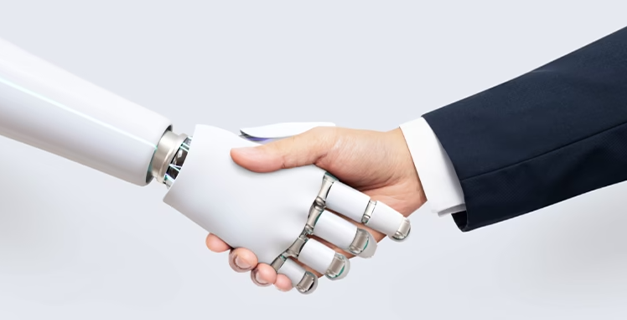
AI does not create advantage by replacing people. It creates advantage when machine intelligence operates inside disciplined human judgment. When collaboration maturity is weak, automation increases divergence. When collaboration maturity is strong, intelligence accelerates alignment. Enterprise performance depends on how AI decisions are structured, governed, interpreted, and synchronized.
AI Collaboration Advantage Through MATURITY
Enterprise AI advantage follows a structured maturity progression.
M
Measure
Measure whether AI is reducing ambiguity or increasing variance. If similar decisions produce conflicting outcomes across teams, collaboration maturity is weak regardless of deployment scale.
A
Align
Align AI initiatives directly to enterprise strategy and customer outcomes. AI that serves local optimization instead of shared direction embeds fragmentation into the system.
T
Transpose
Transpose AI from experimentation into decision architecture. Define clearly where AI informs decisions and where human authority remains accountable.
U
Upskill
Upskill leadership to interpret, challenge, and contextualize AI outputs. Without executive judgment capability, reliance turns into dependency.
R
Refine
Refine governance continuously. Bias, model drift, and unclear accountability compound risk faster in AI-enabled environments.
I
Integrate
Integrate AI as a coordination layer across functions. Intelligence must flow coherently across strategy, operations, and execution.
T
Track
Track decision coherence, not tool adoption. Alignment stability, reduced reversals, and enterprise consistency signal maturity.
Y
Yield
Yield advantage only when intelligence is aligned. Faster decisions, lower friction, and sustained trust emerge from disciplined coordination.
The Synergy Protocol
True AI value comes from structured collaboration between human judgment and machine intelligence.
The system operates across three degrees of autonomy:
HITL (Human-in-the-Loop)
For critical decisions, judgment, and refinement.
Focus: Strategic Risk and High Empathy
- Strategic Financial Planning: Human experts review AI-generated market forecasts to make multi-million dollar investment decisions.
- Executive Hiring and Retention: AI screens resumes while leaders conduct deep interviews to assess cultural fit and leadership potential.
- Legal and Ethical Compliance: Legal teams audit AI-drafted contracts for nuanced liability and regulatory adherence.
HOTL (Human-on-the-Loop)
For scaled systems with human oversight.
Focus: Scaled Operations and Quality Assurance
- Customer Support Monitoring: AI handles 90% of basic inquiries while human supervisors monitor transcripts for sentiment and intervene in escalations.
- Supply Chain Optimization: Systems manage inventory levels automatically while managers review weekly reports to override anomalies in global logistics.
- Marketing Content Engines: AI generates large volumes of social media and email drafts for a human editor to approve and brand-align in bulk.
HOOTL (Human-out-of-the-Loop)
For low-risk, high-speed execution.
Focus: Real-Time Speed and Repetitive Tasks
- Fraud Detection: Automated systems block suspicious credit card transactions instantly based on pre-defined risk parameters.
- IT Infrastructure Maintenance: Self-healing servers detect and resolve minor software bugs or traffic surges without manual intervention.
- Data Entry and Synchronization: AI bots move information between legacy CRM systems and modern cloud databases with 100% automation.
High-performing organizations design all three into the system.
3x
Revenue Growth
30%
Reduced Cost
2x
Customer Retention
40%
Faster Decisions
What Enterprise Leaders Gain
- Clear human–AI role clarity
- Reduced decision variance across functions
- Cross-enterprise coordination
- Faster aligned execution
- Sustained trust in AI-supported decisions
Related Insights
Practical guidance for executives navigating digital maturity.
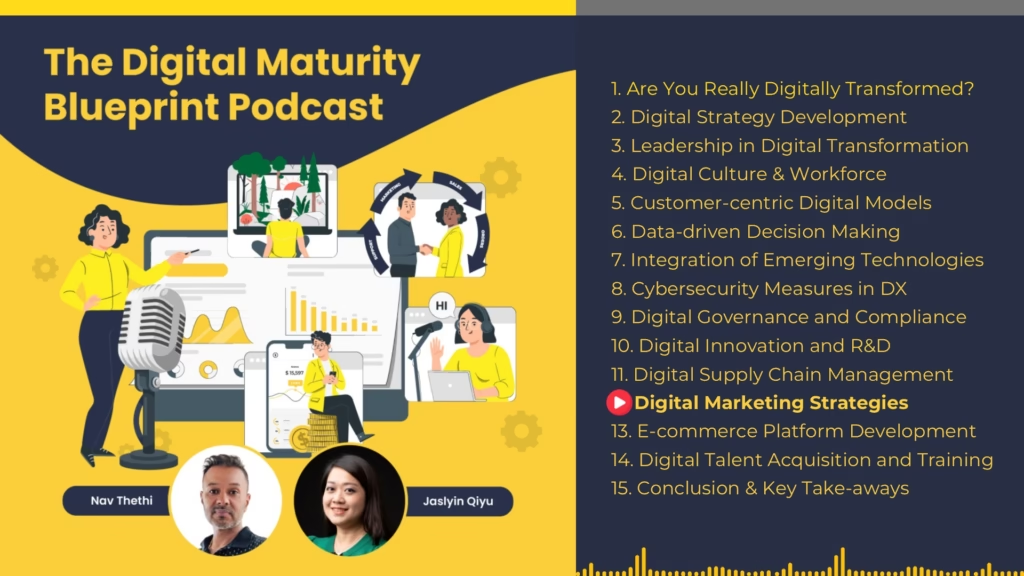
Digital Marketing Strategies: A Smarter, Greener, More Efficient Future – A Podcast Summary
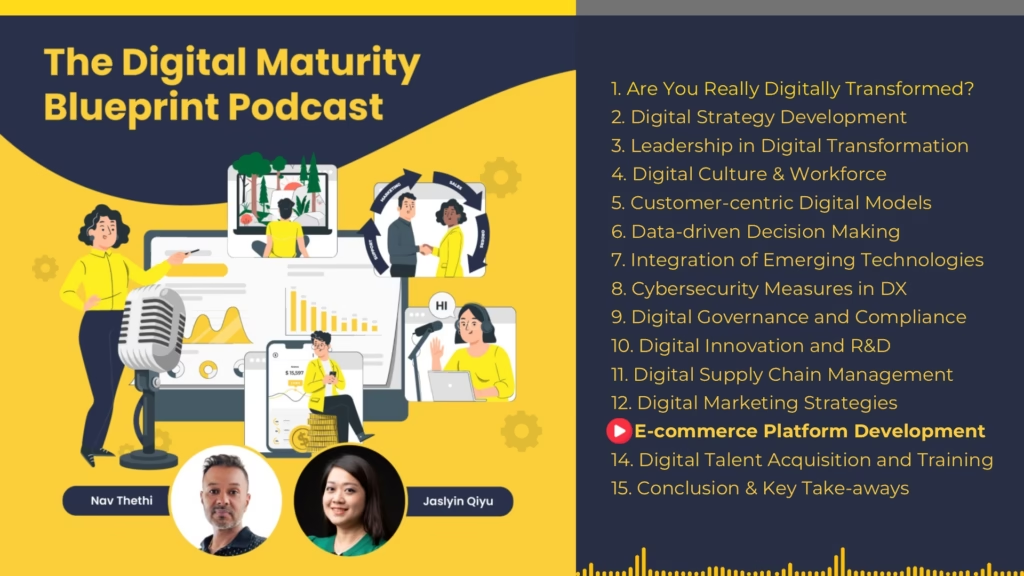
The Digital Maturity of E-Commerce: A New Playbook for Business Growth – A Podcast Summary

What Global Leaders Said About The Future of Work & AI in 2026: Exclusive Insights from The Nav Thethi Show
Explore the Conversation
AI, Marketing, and the Future of the C-Suite: Trust, Data, and Growth
What Happens When AI Meets Human-Centered Customer Experience?
CX Leadership in AI Era: Drive ROI, Retention, and Outcome
Reveal Where Your AI Coordination Breaks
Most organizations measure AI adoption. Few measure AI coherence.
Assess how AI scale impacts your coordination.
You don’t need another pilot. You need structural clarity.
- Technology: Modernize infrastructure for scalable AI integration.
- Data: Standardize information for high-quality machine insights.
- CX: Personalize journeys through predictive user analytics.
- Culture: Foster agility for human-AI team collaboration.
- Leadership: Drive vision through informed digital governance.
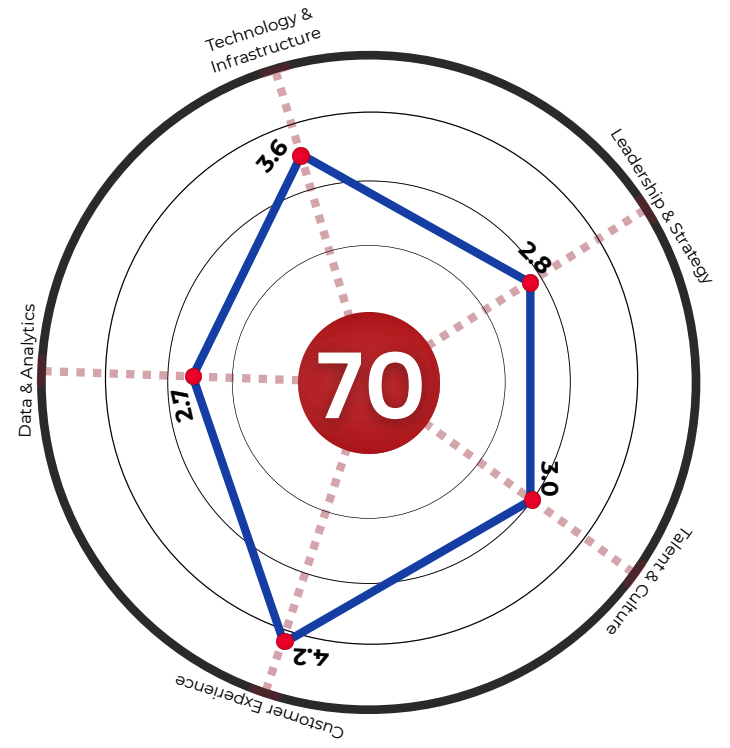
Nav helps leaders design AI collaboration systems grounded in how organizations actually work- not how tools are marketed.
FAQ
Your Questions Answered: Insights for Clarity and Confidence
Is AI collaboration the same as AI automation?
No.
Automation replaces tasks. AI collaboration supports human thinking, coordination, and decision-making.
Is AI collaboration primarily a technology or leadership challenge?
It is a leadership and system-design challenge first.
Technology enables collaboration only after roles, workflows, and decision rights are clearly defined.
What are the benefits of AI collaboration for organizations?
AI collaboration helps teams work faster and make better decisions.
By combining AI insights with human expertise, organizations improve productivity, reduce errors, and identify opportunities more quickly.
Where is AI collaboration used in business?
AI collaboration is used across many functions.
Examples include customer service, data analysis, supply chain planning, healthcare diagnostics, and marketing personalization.
Why do AI tools often fail to gain adoption?
Because roles are unclear.
When people don’t know when to trust AI- or how it supports them- adoption breaks down.
How does digital maturity affect AI collaboration?
Digital maturity determines whether AI can be embedded into workflows, data flows, and decision structures consistently.
What is Human-AI Collaboration?
Human AI collaboration means people and AI systems working together to complete tasks and make decisions.
AI analyzes data, identifies patterns, and automates repetitive work. Humans provide judgment, creativity, and strategic direction.
How can organizations start implementing AI collaboration?
Organizations should begin by identifying workflows where AI can support decision making or automate repetitive tasks.
Successful adoption requires clear roles between humans and AI systems, reliable data, and training so teams understand how to use AI effectively.
Understand Your AI Coordination Maturity
Take the assessment and benchmark your progress today.